How Major UK Bookmakers Align Retention Incentives with Seasonal Sports Calendars
Written by Jonas Schmid · Oct 31, 2026
How Major UK Bookmakers Align Retention Incentives with Seasonal Sports Calendars
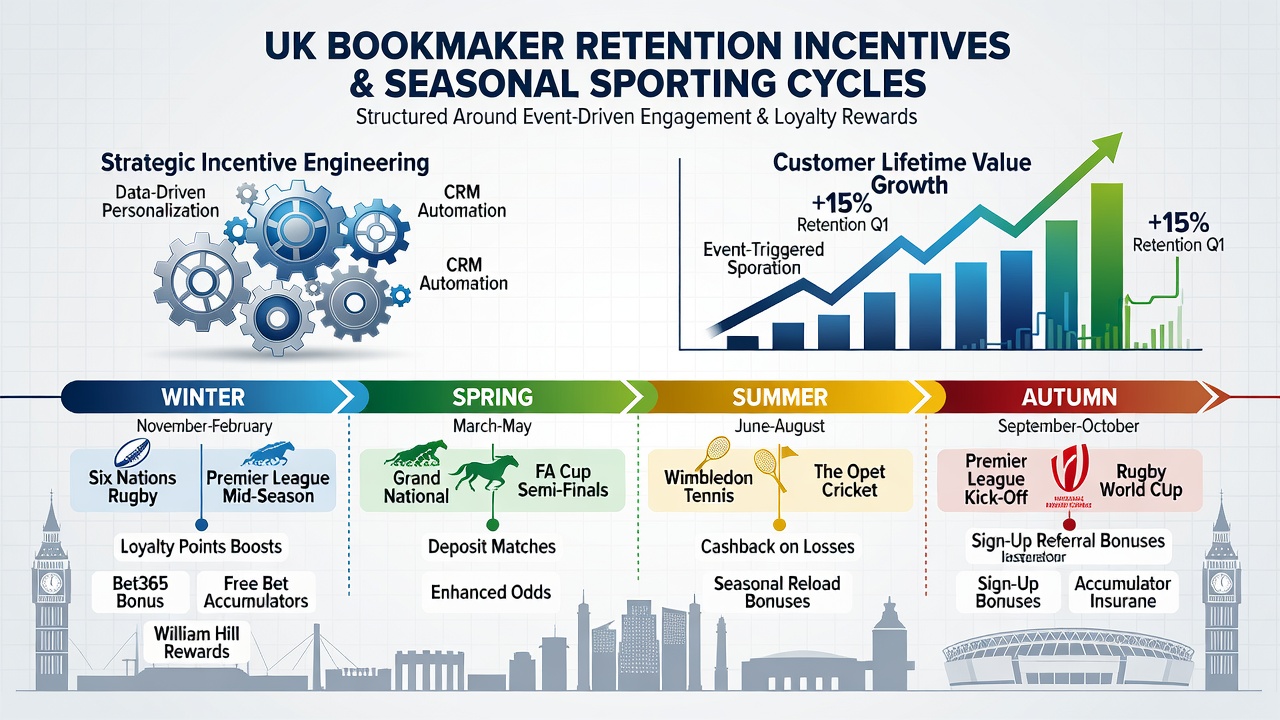
UK bookmakers coordinate retention incentives with recurring sports calendars because these periods generate predictable spikes in customer activity, and operators time offers such as enhanced odds, loyalty points, and cashback schemes to maintain engagement across those windows. Data from the British Horseracing Authority shows that major festivals drive measurable increases in betting volumes, prompting platforms to release targeted promotions that extend participation beyond single events.
Football Season as the Primary Anchor
The Premier League schedule, which runs from August through May with a winter break and international windows, forms the backbone of many retention strategies. Operators release accumulator boosts and free bet multipliers on weekends when multiple matches occur, while midweek European fixtures trigger separate loyalty tiers that reward users for consistent staking throughout October 2026 and similar months. These structures help platforms retain users who might otherwise reduce activity during quieter fixture periods.
Horse Racing Festivals and Their Incentive Patterns
Annual events such as the Cheltenham Festival in March, Royal Ascot in June, and the Grand National in April prompt operators to layer deposit bonuses and enhanced place terms onto existing loyalty programmes. Retention teams activate tiered rewards that escalate with cumulative bets placed across the festival week, and similar mechanics appear during the autumn jumps season. This approach capitalises on concentrated attendance spikes that occur each year at fixed calendar points.
Cricket, Rugby and Secondary Calendars
Operators also synchronise offers with the Ashes cricket series, Six Nations rugby tournaments, and domestic T20 campaigns. Data patterns indicate that retention incentives during these windows often include cashback on losing bets or bonus credits tied to specific match outcomes, helping sustain activity when football fixtures thin out. Platforms adjust the value and frequency of these rewards according to historical engagement metrics collected over previous seasons.
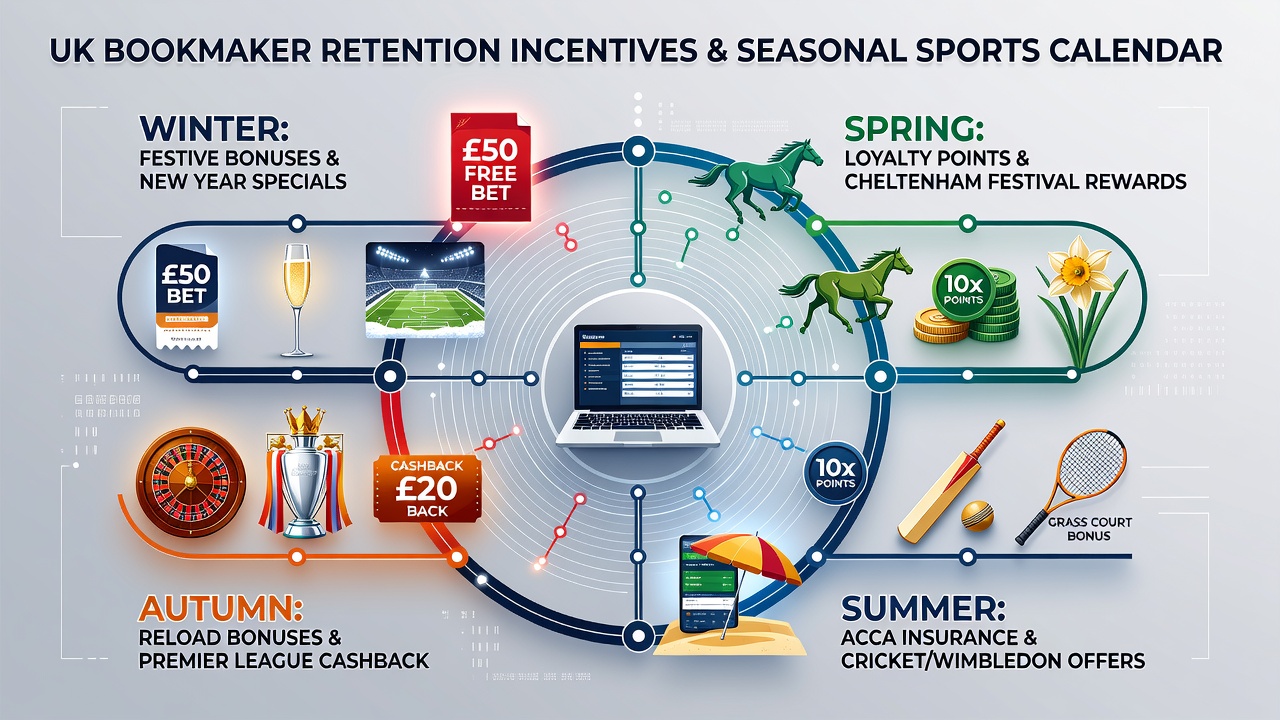
What's interesting is how loyalty programmes incorporate seasonal calendars into their core mechanics. Users earn points at accelerated rates during designated event windows, and these points convert into free bets or cash equivalents that encourage return visits after the event concludes. Operators track redemption rates closely, adjusting future offers to match observed behaviour across multiple years of data.
Cross-Sport Retention Tactics in Practice
One common method involves bundling rewards across sports so that activity in one category unlocks benefits in another. For instance, a user placing bets on Premier League matches during October 2026 might receive a bonus applicable to upcoming horse racing or cricket events. This cross-promotion reduces drop-off between peak periods and maintains platform usage throughout the year. Figures released by the European Gaming and Betting Association reveal that such integrated approaches correlate with higher repeat engagement rates across monitored operators.
Another tactic centres on personalised communications triggered by calendar milestones. Customers receive notifications about upcoming festivals or league restarts, accompanied by tailored incentives based on their past betting history. These messages often include time-limited offers that expire shortly after the relevant event window closes, creating urgency without altering base odds structures.
Data-Driven Adjustments Across the Calendar
Operators analyse historical staking data to refine incentive timing and value. During periods of lower fixture density, such as early summer or international breaks, retention teams increase the generosity of ongoing loyalty multipliers to offset reduced natural activity. Research conducted by the Responsible Gambling Council in Canada indicates that calendar-aligned incentives can influence session frequency when operators monitor and respond to seasonal fluctuations in real time.
Platforms also coordinate with governing bodies and event organisers to align promotional windows wth broadcast schedules, ensuring maximum visibility for both the sporting event and the accompanying retention offers. This coordination produces measurable lifts in active user counts that persist for several weeks following major festivals.
Conclusion
UK bookmakers structure retention incentives by mapping them directly onto recurring sports calendars, using football seasons, racing festivals, and secondary events as fixed reference points for offer deployment. Loyalty programmes, cross-sport bundling, and data-informed timing adjustments form the operational framework that keeps engagement levels stable throughout the year. As the 2026 season unfolds, these patterns continue to guide how operators allocate resources across predictable event cycles.